Will Nasa Send a Man to Space Again
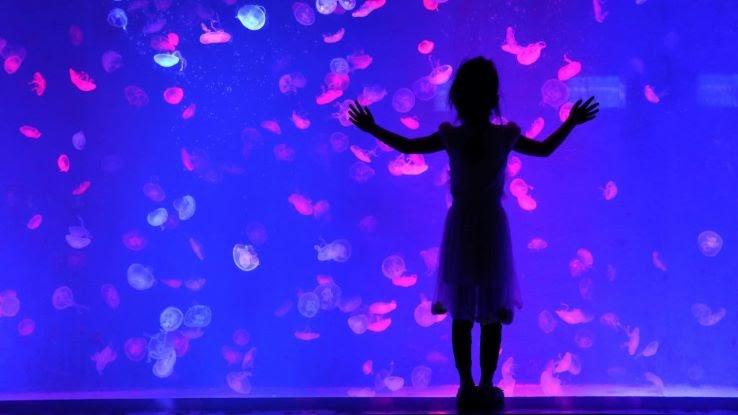
On June 5, 1991, NASA embarked on a mission that featured several firsts: For one, this was the agency'due south showtime mission that included three female crew members, which rocks our socks. Merely, on a more than bizarre notation, onboard the ship at that place were also 2,478 jellyfish, which had never been studied in space earlier. Why were jellyfish, out of all living things, brought to outer space to be studied? What did NASA learn from studying jellyfish? It turns out that humankind has more in common with these swimming mushrooms than one might think at start glance.
Why Did NASA Study Jellyfish in the Kickoff Place?
Space launch STS-40 was a NASA mission that's also known equally SLS-ane. "STS" stands for Space Transportation Arrangement. For those who aren't space travel enthusiasts, that's the way in which NASA labels its space shuttle launches and expeditions.
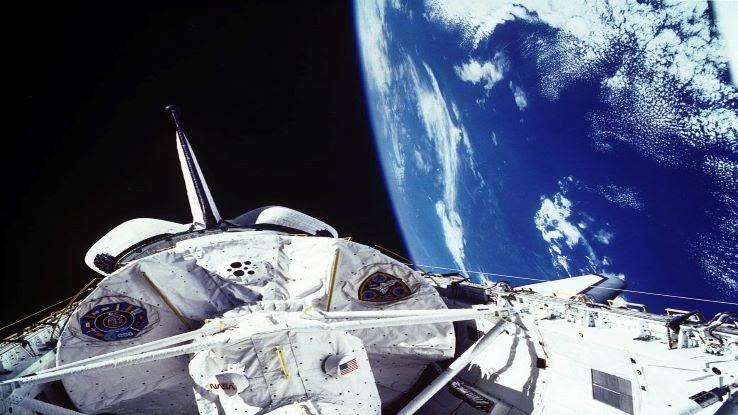
SLS-ane (pictured higher up), in this example, refers to Spacelab Life Sciences-1. "SLS" can too mean Space Launch System, but that'southward the importance of the -1. Spacelab was a removable laboratory with the purpose of studying life sciences in space. Life sciences, like your middle schoolhouse science grade, involves the study of living organisms. The purpose of Spacelab was to study how animal life reacts to the weightlessness of space, as well known as "microgravity."
Infinite Shuttle Columbia, which tragically disintegrated upon re-entry into Earth's temper in 2003, was an orbiting ship that circled the planet for 27 missions to gather evidence nearly what happens to the human trunk in outer infinite. For the STS-forty mission, seven humans, 30 white rodents and the ii,478 jellies were brought on board. This was the kickoff time that NASA sent jellyfish up to space, only it wasn't the outset time animals entered the thermosphere: Aside from rats, monkeys, bees, moths, spiders and fish have also gone into space.
The mission lasted 9 days. Aside from the jellyfish, the crew tested fauna equipment on the rodents and studied the nervous systems, heartbeats and blood pressures of the crew. Of all the findings from the trip, the jellyfish seem to have emerged as the stars of the evidence.
In a second mission, merely non the side by side mission, called STS-65 (a.1000.a. IML-2), jellyfish went back upwards into space to be studied past scientists in one case once again. This time, the crew brought over 100 newts along. In both experiments, jellyfish were allowed to replicate. Jellyfish tin reproduce asexually or with a partner, so the number of jellyfish in space increased every bit the days went on.
Jellyfish, Calcium, Humans and Gravity
Jellyfish were brought to space because, believe it or not, jellyfish and humans have a like relationship to gravity. This might seem foreign at first, merely close your optics for a minute and remember about how a jellyfish moves. Normally, it's as if the jellyfish steers itself through the water. Rarely do jellyfishes' "umbrella heads" ever look out of proportion or reversed the style you'd see an umbrella open up in a rainstorm.
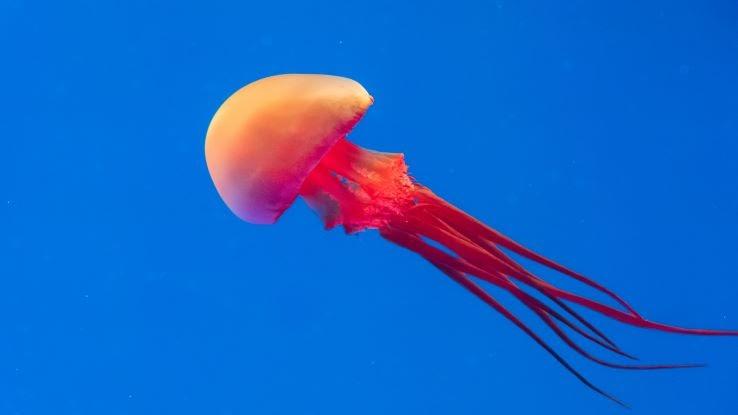
In that location'southward too a scientific reason why humankind's and jellyfishes' relationships to gravity are so similar. It all has to do with calcium. Jellyfish take calcium sulfate crystals growing under their bell (the umbrella/mushroom-type outer layer). As they propel through water, the crystals suit to the gravitational pull, and that motion sends a signal to the brain that lets the jellyfish know which way is down.
People take similar crystals and fluids in the human ear, and their presence affects hairs that alert the encephalon as to what bending a person'southward caput is at. Ever notice how if y'all're looking down at your phone or a book, your head feels like it's at an bending that's pointing towards that footing? Jellyfish experience a like feeling when they swim.
What Were the Findings of These Experiments?
In 1991's STS-xl mission, scientists found that jellyfish built-in on Earth underwent some hormonal changes in infinite. They likewise plant that jellyfish born in infinite had a hard time swimming on Earth upon their render. It was noted that both jellyfish born on Earth and those born in microgravity — pregnant an environment where at that place was niggling to no gravity — had difficulty orienting themselves in space. This could give us an idea of what information technology will somewhen be similar to have water in space stations for people to swim in or how we can await space fisheries down the road to function.
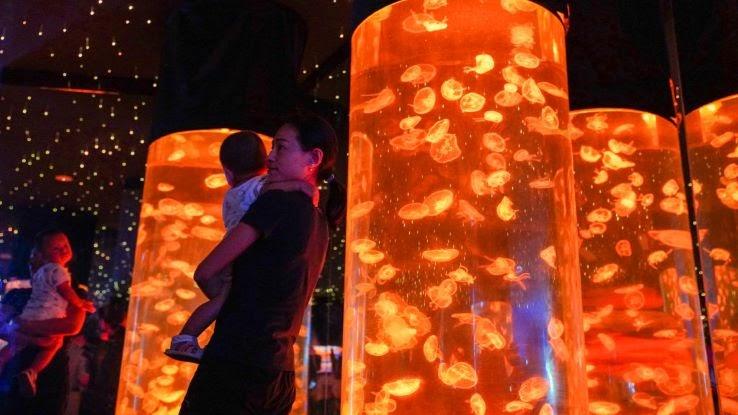
Scientists went on to detect in 1994'south IML-two mission that budding and metamorphosis of jellyfish in microgravitaional conditions went well. That means that jellyfish did non have many issues maturing through their life cycles and handled microgravity well. They also found that jellyfish that were developed (born) in space had a hard time adjusting to normal gravity after being born in microgravity weather and were more probable to have abnormal arm development. Yous can read all most it in Life Into Space, a written report that's bachelor for costless on NASA'southward website.
These findings could hateful one of ii things: The jellyfish were built-in with developmental defects that hinder their movement, or they only practice not desire to motility.
Some take speculated that this means that the jellyfish are depressed. This could mean more only that the invertebrates are having a tough time moving around and adjusting to gravity.
As for what it ways for humans, it's possible that people volition fall as presently every bit they step on to Earth for the commencement time if they're born in space. They could be directionally challenged, pregnant they may struggle to align their bodies to a indicate to where they can commit to walking in a certain direction. It could also mean cases of vertigo, even when sitting.
The Transformation From Experiment to Myth
In 2013, Deep Sea News reported on the jellyfish and the study's findings in a humorous way. Similar a game of telephone, the true story of these jellyfish was blown out of proportion. Publications cited this mission and made the assumption that the jellyfish had recently returned from space — that they had been upwardly in the sky for 20 years.
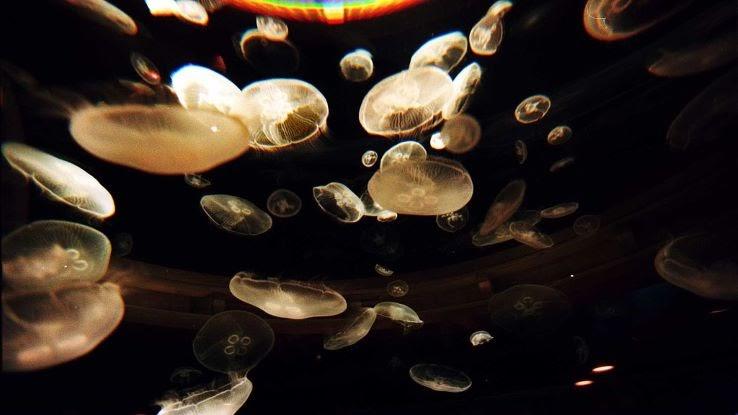
This was not the instance, however; the International Space Station wasn't launched until 1998. A slew of articles followed, celebrating the 20th ceremony of the jellyfish allegedly living in space that entire time. Just something was majorly off: In 1993, jellyfish did not go upwardly into space.
In October of 1993, STS-58, also known as SLS-2, went up. This is a lot like STS-40, likewise known as SLS-ane, which happened in 1991. NASA didn't bring jellyfish back to space until July 1994 for IML-2. Many of the reported findings made a few inferences that don't add up with the dates and available data.
What Does This Mean for the Time to come of Space Travel?
If people e'er want to live on another planet or in outer space itself, they'll need to know how the homo body will develop in microgravity situations. The means the body reacts to Earth's gravity after beingness in space for a significant menses of fourth dimension is also important, especially if humans are somewhen going to be born in infinite. At that place's a chance that humans built-in in space might face developmental struggles.
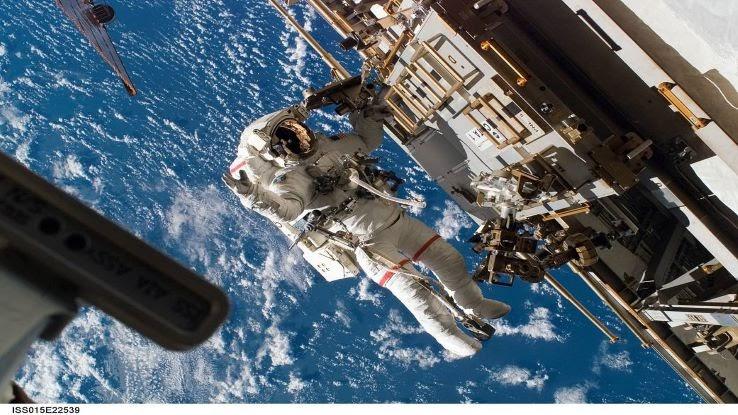
Thankfully, NASA has been looking at people more closely in this matter. In the contempo Twins Study, ane twin lived in infinite for a year while the other stayed on World as a control discipline. The study plant that entering the microgravity of space after being on Globe for and so long, and then later going back to Globe, can have quite a price on the body. Like every frontier, humankind has a lot of exploration to exercise before we'll fully understand just how well we can adapt to living in infinite.
As for the jellyfish of NASA, if we ever make it into space long-term, they'll be touted as heroes for Globe and humankind. Perhaps it'due south fitting, then, that the thought of them invokes legend. While jellyfish may be an invasive species, information technology's comforting to know that they likewise take a hard time figuring out which mode is up.
knighttravensivers.blogspot.com
Source: https://www.reference.com/pets-animals/jellyfish-sent-to-space?utm_content=params%3Ao%3D740005%26ad%3DdirN%26qo%3DserpIndex
0 Response to "Will Nasa Send a Man to Space Again"
Post a Comment